Posted by jlwile on November 13, 2012

This species of catus worm, Priapulus caudatus, falsified another evolutionary prediction (click for credit)
Look at the unassuming worm pictured on the left. It is commonly called a cactus worm, but this particular species is known as Priapulus caudatus. According to evolutionists, cactus worms have been around for at least 500 million years.1, but they just recently falsified yet another prediction made by the hypothesis of evolution. To understand the prediction and why it has failed, you need to learn some background information.
There are many different ways scientists classify animals, but one of the broader ways it is done is by symmetry. Most of the animals with which you are familiar are bilaterally symmetric. This means their bodies can be split into a left half and a right half, and those two halves are roughly mirror images of each other. Cats, dogs, and horses are all bilaterally symmetric, as they all have distinct right and left sides that roughly mirror each other. In addition, cactus worms are bilaterally symmetric. Since there are a lot of animals that have this kind of symmetry, scientists have to find characteristics among the bilaterally symmetric animals that will further classify them.
Well, there are two different ways that bilaterally symmetric animals develop their digestive tract. In all these animals, a puckered indentation forms in the embryo. This indentation, called the blastopore, forms the beginning of a tube that will eventually develop into the digestive tract. However, in some bilaterally symmetric animals, that blastopore ends up becoming the mouth, while in other bilaterally symmetric animals, the blastopore ends up becoming the anus. In other words, some animals start their digestive system with their mouth, while others start their digestive system with their anus. The “mouth first” animals are called protostomes, which is a combination of the Greek word “protos” (which means first) and “stoma” (which means mouth). The “anus first” animals are called deuterostomes, which means “mouth second,” since the Greek word “deuteros” means “second.”
So when a biologist looks at an animal that is bilaterally symmetric, one of the first questions that comes to mind is, “How does the digestive tract develop?” That tells the biologist whether the animal is a protostome or a deuterostome. Well, it turns out that studying the embryonic development of animals is rather time-consuming, so scientists often use other characteristics to infer the group to which an animal belongs. With all that under your belt, you are now ready to learn about the falsified evolutionary prediction.
WAIT! There is more to read… read on »
Posted by jlwile on November 8, 2012

The La Brea Tar Pits as imagined by Charles R. Knight (public domain image)
Paleontologists have long recognized that the fossil record produces a serious problem for the hypothesis of evolution. Almost thirty years ago, Dr. David Wake and his colleagues stated:1
With natural selection operating in a changing environment as an agent of adaptation, we expect to see changes at the organismal, ultimately physiological and morphological, level. How, though, can we explain the paradoxical situation in which environments change, even dramatically, but organisms do not?
In other words, evolution predicts that in a changing environment, organisms should change in order to adapt. However, when we look at the fossil record, we don’t see such change. Instead, while it is thought that earth’s climate changed dramatically in many different ways throughout the fossil record, the fossils themselves show that the organisms living on earth didn’t change much at all. This has been called the “paradox of stasis,” and while several attempts have been made to resolve the problem2, none of them have been found to be satisfactory.3
In an attempt to understand the paradox of stasis better, Dr. Donald Prothero undertook a series of amazingly detailed studies. With the help of a small army of students, Prothero studied the fossils of all the common birds and mammals that have been preserved in the La Brea tar pits of Los Angeles, California. According to the standard geological view, these tar pits preserved species that lived in the area over a period of time when the region experienced wild climate change. It is thought that 35,000 years ago, the Los Angeles, California area had a very similar climate to what it has today. During the height of the last ice age (20,000 years ago), however, it was significantly colder and significantly wetter. As the ice age waned, the climate returned to what it was 35,000 years ago.
From an evolutionary point of view, one would expect that over the course of this dramatic change in climate, the birds and mammals living in the area would have experienced some amount of evolutionary change in order to adapt to their surroundings. However, that’s not what this series of studies found.
WAIT! There is more to read… read on »
Posted by jlwile on October 29, 2012

The great orange tip butterfly has a toxin in its wings that is identical to the toxin used by the marble cone snail. (Click for credit)
A former student of mine recently alerted me to a study that was published in the Proceedings of the National Academy of Sciences. The authors were studying the proteins found in the wings of a great orange tip butterfly, Hebomoia glaucippe. As they sorted through what they found, they were surprised to find a toxin known as glacontryphan-M.1 The fact that it is a toxin wasn’t surprising to them. After all, Monarch butterflies have cardiac glycosides in their bodies, which are toxic to many birds.2 It is thought that this is a defense mechanism, because birds that eat a monarch butterfly and get sick are unlikely to eat more monarch butterflies.
Here’s what’s surprising: the toxin is also found in a sea snail known as the marble cone snail, Conus marmoreus.3 You can see how it gets its name:

The marble cone snail (Click for credit)
The marble cone snail uses the toxin for hunting. It injects the toxin into its prey, paralyzing it. That makes the prey very easy to eat. Obviously, the researchers were surprised to find the same toxin in two separate species that are supposed to be distantly related in terms of evolution. More importantly, they were surprised at the fact that the two toxins are chemically identical.
WAIT! There is more to read… read on »
Posted by jlwile on October 26, 2012
One of the biggest problems facing evolutionists is the explanation of how brand new information can be added to a genome. After all, if flagellates eventually evolved into philosophers, an enormous amount of truly original information had to be added to flagellates’ (and their descendents’) genomes. However, genomes are so well-designed and highly-structured, it is difficult to imagine a naturalistic process that could add information to them. Nevertheless, evolutionists have tried their best. One of the more popular notions is gene duplication followed by mutation. We know that genes can be duplicated. It happens quite frequently. The thought is that when a gene is duplicated, one of the copies can continue to produce the protein it is supposed to produce, while the other copy is free to mutate and find some completely new function.
While the thinking behind this idea is logical, experimental evidence to support it has been hard to find. As a result, evolutionists tend to jump on any experimental finding that might suggest the idea is accurate. This is well illustrated by an article that was linked by a commenter on a previous thread. The article claims that researchers have finally shown how a gene can pick up a brand new function, which can then be amplified and modified over time.
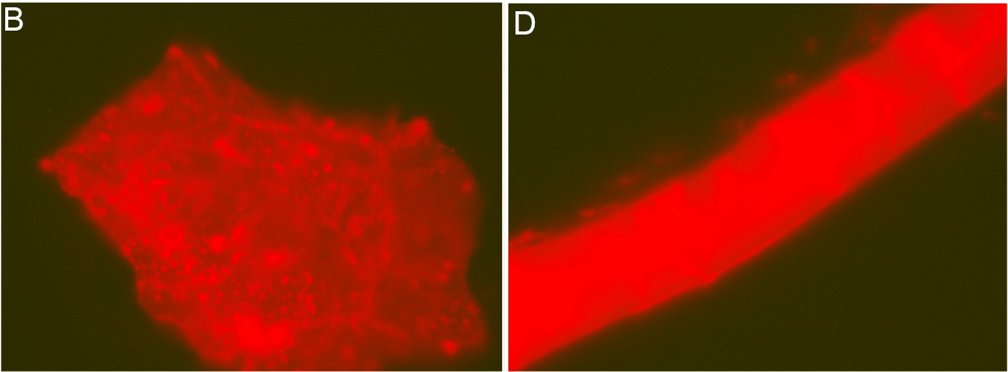
Unfortunately, the article’s claim is not accurate. I had already read the scientific paper on which the article was based1, so when I read the article, I understood how incorrect its claims are. However, I am sure the commenter and many other readers of Science Daily do not. As a result, I want to discuss the study’s actual findings. They are very interesting, and they tell us a lot about the genetics of bacterial adaptation. However, they don’t tell us anything about how genes acquire brand new functions or about how information can be added to a genome.
WAIT! There is more to read… read on »
Posted by jlwile on October 16, 2012

A beanbug, Riptortus pedestris (click for credit)
Mutualistic symbiosis, the process by which organisms of different species interact so that all of them benefit, is a very common phenomenon in creation (see here, here, here, here, and here for a few examples). A recent study in the Proceedings of the National Academy of Sciences, USA highlights a very interesting case of mutualistic symbiosis that not only has some important implications for farmers, but also relates to the creation/evolution controversy.
The study examined insecticide resistance in bean bugs (Riptortus pedestris) and similar insects. The authors considered one of the most popular insecticides used by farmers across the world, fenitrothion. It has been known for some time that certain insects, such as the bean bugs in the study, can develop resistance to that insecticide. This is a problem, since bean bugs not only damage bean crops, but also some fruit crops.1 The authors were interested in what causes this insecticide resistance. As they state in the introduction to their paper:
Mechanisms underlying the insecticide resistance may involve alteration of drug target sites, up-regulation of degrading enzymes, and enhancement of drug excretion, which are generally attributable to mutational changes in the pest insect genomes.
In other words, when an insect develops resistance to an insecticide, it is generally assumed that there was a change in the DNA of the insect. A mutation might have damaged the site where the insecticide is supposed to bind; the activity of a gene involved in the destruction of unwanted chemicals might have been enhanced so that the insect destroys the insecticide; or perhaps the activity of a gene involved in getting rid of waste is enhanced so that the insect just excretes the insecticide.
The authors show that for the specific case of fenitrothion resistance in bean bugs and similar insects, none of these mechanisms play a role.
WAIT! There is more to read… read on »
Posted by jlwile on October 12, 2012

The cover of Fodor and Piattelli-Palmarini's book
Not long ago, Dr. Jerry Alan Fodor (a professor of Philosophy) and Dr. Massimo Piattelli-Palmarini (a professor of cognitive science) wrote a book entitled What Darwin Got Wrong. I haven’t read the book, but what I have read about it indicates that the authors strongly believe Darwin was right when it comes to the idea that all species descended from a common ancestor. However, they strongly disagree with the mechanism that Darwin proposed (and most Neo-Darwinists accept) for the process by which that happened. While most modern evolutionists contend that mutation acted on by natural selection is the main process by which species adapt and change, the authors argue that it is only one of many considerations. In fact, they go a step further and claim that there is no scientific reason to elevate natural selection above these other processes which it comes to their relative importance.
Since I have not read the book, I cannot comment on the validity of their arguments. However, I ran across a quote from the introduction that makes me want to read the entire book. They call their introduction “Terms of Engagement.” After laying out the terms and outlining the contents of the book, the authors write:
So much for a prospectus. We close these prefatory comments with a brief homily: we’ve been told by more than one of our colleagues that, even if Darwin was substantially wrong to claim that natural selection is the mechanism of evolution, nonetheless we shouldn’t say so. Not, anyhow, in public. To do that is, however inadvertently, to align oneself with the Forces of Darkness, whose goal it is to bring Science into disrepute. Well, we don’t agree. We think the way to discomfort the Forces of Darkness is to follow the arguments wherever they may lead, spreading such light as one can in the course of doing so. What makes the Forces of Darkness dark is that they aren’t willing to do that. What makes science scientific is that it is.
[Jerry Fodor and Massimo Piattelli-Palmarini, What Darwin Got Wrong, Farrar, Straus, and Giroux, First American Edition 2010, p. xx]
I couldn’t agree more. When those who call themselves scientists want to shut off debate on an issue, they are exposing themselves for what they are: rabidly anti-science. Science is all about following the evidence, regardless of where that evidence might lead. It is unfortunate that some (if not many) in the scientific community attempt to silence those who are simply trying to follow the evidence.
Posted by jlwile on October 5, 2012

Thomas Nagel teaching at New York University (click for credit)
Dr. Thomas Nagel is a Professor of Philosophy and Law at New York University. He has a long list of academic publications, which include books and journal articles. He is a Fellow of the American Academy of Arts and Sciences as well as the British Academy. He has been awarded both the Rolf Schock Prize for his work in philosophy and the Balzan Prize for his work in moral philosophy. Oh…and he is an atheist. He recently wrote a fascinating book entitled, Mind and Cosmos:Why the Materialist Neo-Darwinian Conception of Nature is Almost Certainly False.
The book is fascinating on many levels. Probably the most obvious is the fact that while he is an atheist, he speaks very highly of the Intelligent Design movement. In fact, he credits the Intelligent Design movement for stimulating his thinking on the subject of origins. He disagrees with their belief in a Designer, but he has given them a fair hearing, and he says this:
Even if one is not drawn to the alternative of an explanation by the actions of a designer, the problems that these iconoclasts pose for the orthodox scientific consensus should be taken seriously. They do not deserve the scorn with which they are commonly met. It is manifestly unfair. (p.10)
But wait a minute. Aren’t the Intelligent Design arguments fatally flawed? Don’t they rest on an incredibly poor understanding of the nature of science? Not according to this philosopher. He has read both the Intelligent Design advocates and their critics, and he says:
Those who have seriously criticized these arguments have certainly shown there are ways to resist the design conclusion; but the general force of the negative part of the intelligent design position – skepticism about the likelihood of the orthodox reductive view, given the available evidence – does not appear to me to have been destroyed in these exchanges. (p. 11)
But wait a minute, isn’t the only motivation behind Intelligent Design the desire to “prove” the existence of God? Nagel says that’s certainly part of the motivation, but not all of it. After all, he mentions David Berlinski as someone who is sympathetic to the negative claims of the Intelligent Design movement but has no desire to believe in a Designer. He also says:
Nevertheless, I believe the defenders of intelligent design deserve our gratitude for challenging a scientific world view that owes some of the passion displayed by its adherents precisely to the fact that it is thought to liberate us from religion. (p. 12)
In the end, then, religious motivations exist on both sides. Some Intelligent Design advocates are motivated by their desire to lend evidence to their belief in a Designer, but some evolutionists are motivated by their desire to be liberated from religion. This even-handed observation is obviously true, but it is rarely made by those who do not believe in God.
WAIT! There is more to read… read on »
Posted by jlwile on September 27, 2012
Last night, I debated Dr. Robert A. Martin on the question of creation versus evolution. I obviously took the creation side, and he took the evolution side. I debated him once before in 2009, and you can watch a video of that debate here. The format of this debate was a bit different from the one on the video. In this one, we each had 30 minutes to present our case, and then the audience asked us questions. The purpose of the questions was to focus the debate on what the audience found interesting in our presentations. Dr. Martin and I were each given a chance to address the question, and that usually led to more interaction between us. Everyone with whom I talked, including Dr. Martin, was very pleased with how it all turned out.
One thing I have to say up front is how appreciative I am of Dr. Martin. First, the fact that he was willing to do the debate at all is a testament to his commitment to real science education. I contacted several universities in Indiana, and none of them were interested in finding an evolutionist professor who was willing to debate. The common response by evolutionists is that they don’t debate creationists, because that would give the creationist view too much legitimacy. However, Dr. Martin realized that if no one came to give the evolutionary side, everyone at the conference would hear only one side of the story, and that’s not very good when it comes to science education. As a result, he was willing to drive from Kentucky to make sure that both sides were heard.
Second, Dr. Martin was incredibly gracious. He knew going in that this was a creationist event, so he knew that his view would be in the minority. In some ways, he was like a lion in a den of Daniels. However, he was very kind in how he treated everyone. Now don’t get me wrong – he took a strong stand for evolution. He often said things like the evidence for evolution is overwhelming, and that there is just no question about the age of the earth and the universe. But never once did he descend into the name-calling and other nonsense that is common among those who don’t care to discuss evidence. He limited his discussion to the science, and that was great.
Third, Dr. Martin was kind enough to stay longer than we had intended. Not surprisingly, there were a lot of questions, and at the scheduled end of the debate, the moderator stopped and said that we were officially out of time. However, Dr. Marin immediately said that he was willing to stay longer. As a result, everyone who stood up to ask a question was able to interact with us. Even after the debate was over, he stayed and talked with people one-on-one for quite some time. Clearly, Dr. Martin has a passion for science and science education. His demeanor and willingness to pleasantly engage people with whom he disagrees demonstrated that to me in no uncertain terms.
WAIT! There is more to read… read on »
Posted by jlwile on September 19, 2012
As I mentioned in two previous posts (here and here), the coordinated release of scientific papers from the ENCODE project has produced an enormous amount of amazing data when it comes to the human genome and how cells in the body use the information stored there. While the majority of commentary regarding these data has focused on the fact that human cells use more than 80% of the DNA found in them, I think some of the most interesting scientific results have gotten very little attention. They are contained in a paper that was published in a journal named Genome Biology, and they relate to the pseudogenes found in human DNA.
For those who are not aware, a pseudogene is a DNA sequence that looks a lot like a gene, but because of some details in the sequence, it cannot be used to make a protein. Remember, a gene’s job is to provide a “recipe” for the cell so that it can make a protein. Well, a pseudogene looks a lot like a recipe for a protein, but it cannot be used that way. Think of your favorite recipe in a cookbook. If you use it a lot, it probably has stains on it because it has been open while you are cooking. Imagine what would happen if the recipe got so stained that certain important instructions were rendered unreadable. For someone who has never looked at the recipe before, he might recognize that it is a recipe, but because certain important instructions are unreadable, he will never be able to use the recipe to make the dish. That’s what a pseudogene is like. It looks like a recipe for a protein, but certain important parts have been damaged so that they cannot be used properly anymore. As a result, the recipe cannot be used by the cell to make a protein.
Pseudogenes have been promoted by evolutionists as completely functionless and as evidence against the idea that the human genome is the result of design. Here is how Dr. Kenneth R. Miller put it back in 1994:1
From a design point of view, pseudogenes are indeed mistakes. So why are they there? Intelligent design cannot explain the presence of a nonfunctional pseudogene, unless it is willing to allow that the designer made serious errors, wasting millions of bases of DNA on a blueprint full of junk and scribbles. Evolution, however, can explain them easily. Pseudogenes are nothing more than chance experiments in gene duplication that have failed, and they persist in the genome as evolutionary remnants…
Obviously, Dr. Miller didn’t understand intelligent design or creationism when he wrote that, as they can both explain nonfunctional pseudogenes. Before I discuss that, however, I need to point out that since 1994, functions have been found for certain pseudogenes. As far as I can tell, the first definitive evidence for function in a pseudogene came in 2003, when Shinji Hirotsune and colleagues found that a specific pseudogene was involved in regulating the functional gene that it resembles.2 Since then, functions for several other pseudogenes have been found. In fact, a recent paper in RNA Biology suggests that the use of pseudogenes as regulatory agents is “widespread.”3
Even though functions have been found for many pseudogenes, the question remains: Are most pseudogenes functional, or are most of them non-functional? Well, based on the ENCODE results, we might have the answer. While the ENCODE results indicate that the vast majority of the genome is functional, they also indicate that the vast majority of pseudogenes are, in fact, non-functional.
WAIT! There is more to read… read on »
Posted by jlwile on September 16, 2012
A blogger by the name of Emil Karlsson recently wrote an error-laden piece defending Bill Nye’s rant against creationism. A commenter on this site posted the piece, and as a science educator, I had to point out many of its errors. Mr. Karlsson responded by posting a piece with even more errors. Once again, as a science educator, I had to correct those errors. Well, Mr. Karlsson has attempted to reply to that post, and not surprisingly, he has done so with even more errors. In an effort to educate those who are interested in understanding science and how it works, I will once again correct Mr. Karlsson’s errors.
Still Trying to Get Around What Mr. Nye Actually Said
Mr. Karlsson is still trying to make excuses for Nye’s obvious ignorance when it comes to evolution denial around the world. In an attempt to explain around Mr. Nye’s own words, Mr. Karlsson sets up a hypothetical interrogation in an attempt to claim that I am looking for “ammunition” to use against Nye. Here is his hypothetical interrogation:
Interrogator: Did you smash the windshield of Mr. X’s car?
Innocent suspect: No. I mean, I don’t like the guy and he annoys me to no end, but I would never go so far as to destroy his property just because we did not get along. Besides, I was having lunch at the cafeteria when it happened.
He then says there are two ways you can interpret this. First, he claims that my way is to ignore the suspect’s statement of innocence and his alibi and instead focus on the fact that the suspect admits he didn’t like the victim. He claims that his way is to look at the suspect’s entire statement and conclude that the suspect is not guilty.
WAIT! There is more to read… read on »