
subscribe to the RSS Feed

Tuesday, May 21, 2013

Science & Human Origins

Posted by jlwile on March 25, 2013

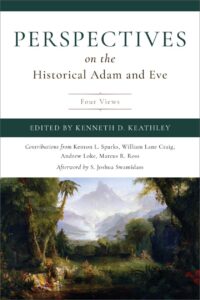
I was recently asked to review the book Science & Human Origins for Apologetics 315. While the book is not perfect, it is definitely worth the read.

You can see my review here.

Cosmos, Bios, Theos

Posted by jlwile on February 11, 2013

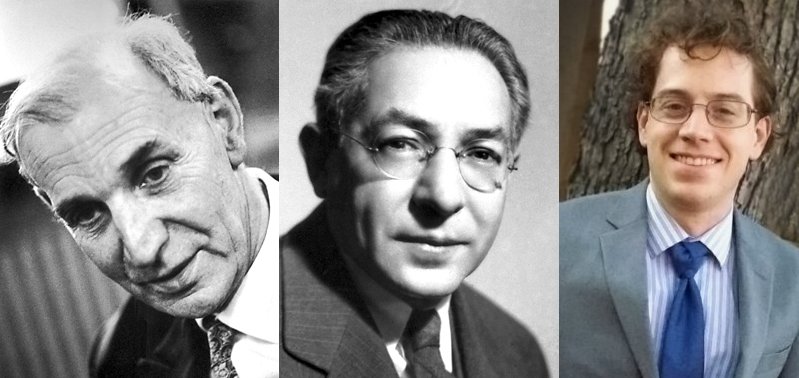
Dr. Henry Margenau was the Eugene Higgins Professor Emeritus of Physics and Natural Philosophy at Yale. He died in 1997, but five years before that, he and Roy Varghese, an international journalist, teamed up to edit a book entitled Cosmos, Bios, and Theos: Scientists Reflect on Science, God, and the Origins of the Universe, Life, and Homo sapiens. I came across an old review of the book some time ago, and it sounded intriguing, so I decided to put it on my reading list.

Margenau and Varghese contacted some of the most important scientists of the twentieth century and ask them about their views regarding God and the subject of origins. In the end, they got responses from 60 prominent scientists, 24 of whom had won the Nobel Prize. Most of them responded to six questions that Margenau and Varghese asked:

1. What do you think should be the relationship between religion and science?

2. What is your view on the origin of the universe: both on a scientific level and – if you see the need – on a metaphysical level?

3. What is your view on the origin of life: both on a scientific level and – if you see the need – on a metaphysical level?

4. What is your view on the origin of Homo sapiens?

5. How should science – and the scientist – approach origin questions, specifically the origin of the universe and the origin of life?

6. Many prominent scientists – including Darwin, Einstein, and Planck – have considered the concept of God very seriously. What are your thoughts on the concept of God and the existence of God.

As you might expect when 60 deep thinkers are asked such serious questions, the answers were varied and incredibly interesting. Before I discuss them, however, it is important to make two points. The first one is made in the preface of the book:

Cosmos, Bios, Theos makes no pretension to being a statistically significant survey of the religious beliefs of modern scientists. (p. xiii)

So the reader should not use the responses contained in this book to infer the general attitude among scientists toward the existence of God or the question of origins.

The second point is that not all the scientists responded to those six questions. Instead, some simply wrote a few pages of general thoughts about the topics of God and origins. Others permitted the use of interviews that had already taken place between them and Roy Varghese.

WAIT! There is more to read… read on »

Not God’s Type

Posted by jlwile on December 17, 2012

I read an incredibly interesting book about another atheist-turned-Christian. In this case, it’s Dr. Holly Ordway, and while her conversion was quite different from mine, she was also heavily influenced by the objective evidence that supports the validity of the Christian faith.

My review was published by Apologetics 315. You you can read it there.

An Atheist Who Rejects Materialist Neo-Darwinism

Posted by jlwile on October 5, 2012

Thomas Nagel teaching at New York University (click for credit)

Dr. Thomas Nagel is a Professor of Philosophy and Law at New York University. He has a long list of academic publications, which include books and journal articles. He is a Fellow of the American Academy of Arts and Sciences as well as the British Academy. He has been awarded both the Rolf Schock Prize for his work in philosophy and the Balzan Prize for his work in moral philosophy. Oh…and he is an atheist. He recently wrote a fascinating book entitled, Mind and Cosmos:Why the Materialist Neo-Darwinian Conception of Nature is Almost Certainly False.

The book is fascinating on many levels. Probably the most obvious is the fact that while he is an atheist, he speaks very highly of the Intelligent Design movement. In fact, he credits the Intelligent Design movement for stimulating his thinking on the subject of origins. He disagrees with their belief in a Designer, but he has given them a fair hearing, and he says this:

Even if one is not drawn to the alternative of an explanation by the actions of a designer, the problems that these iconoclasts pose for the orthodox scientific consensus should be taken seriously. They do not deserve the scorn with which they are commonly met. It is manifestly unfair. (p.10)

But wait a minute. Aren’t the Intelligent Design arguments fatally flawed? Don’t they rest on an incredibly poor understanding of the nature of science? Not according to this philosopher. He has read both the Intelligent Design advocates and their critics, and he says:

Those who have seriously criticized these arguments have certainly shown there are ways to resist the design conclusion; but the general force of the negative part of the intelligent design position – skepticism about the likelihood of the orthodox reductive view, given the available evidence – does not appear to me to have been destroyed in these exchanges. (p. 11)

But wait a minute, isn’t the only motivation behind Intelligent Design the desire to “prove” the existence of God? Nagel says that’s certainly part of the motivation, but not all of it. After all, he mentions David Berlinski as someone who is sympathetic to the negative claims of the Intelligent Design movement but has no desire to believe in a Designer. He also says:

Nevertheless, I believe the defenders of intelligent design deserve our gratitude for challenging a scientific world view that owes some of the passion displayed by its adherents precisely to the fact that it is thought to liberate us from religion. (p. 12)

In the end, then, religious motivations exist on both sides. Some Intelligent Design advocates are motivated by their desire to lend evidence to their belief in a Designer, but some evolutionists are motivated by their desire to be liberated from religion. This even-handed observation is obviously true, but it is rarely made by those who do not believe in God.

WAIT! There is more to read… read on »

Time to Redefine the Concept of a Gene?

Posted by jlwile on September 10, 2012

The basic unit of heredity (the gene) has been defined as a stretch of DNA that codes for a protein. In plants, animals, and people, genes are made of introns and exons. The ENCODE results suggest this definition might need to be changed. (Click for credit)


As I posted previously, a huge leap in our understanding of human genetics recently occurred due to the massive results of project ENCODE. In short, the data produced by this project show that at least 80.4% of the human genome (almost certainly more) has at least one biochemical function. As the journal Science declared:1

This week, 30 research papers, including six in Nature and additional papers published by Science, sound the death knell for the idea that our DNA is mostly littered with useless bases.

Not only have the results of ENCODE destroyed the idea that the human genome is mostly junk, it has prompted some to suggest that we must now rethink the definition of the term “gene.” Why? Let’s start with the current definition. Right now, a gene is defined as a section of DNA that tells the cell how to make a specific protein. In plants, animals, and people, genes are composed of exons and introns. In order for the cell to use the gene, it is copied by a molecule called RNA, and that copy is called the RNA transcript. Before the protein is made, the RNA transcript is edited so that the copies of the introns are removed. As a result, when it comes to making a protein, the cell uses only the exons in the gene.

By today’s definition, genes make up only about 3% of the human genome. The problem is that the ENCODE project has shown that a minimum of 74.7% of the human genome produces RNA transcripts!2 Now the process of making an RNA transcript, called “transcription,” takes a lot of energy and requires a lot of cellular resources. It is absurd to think that the cell would invest energy and resources to read sections of DNA that don’t have a function.

In addition, the data in reference (2) demonstrate that many RNA transcripts go to specific regions in the cell, indicating that they are performing a specific function. Since there is so much DNA that does not fit the definition of “gene” but seems to be performing functions in the cell, scientists probably need to redefine what a gene is. Alternatively, scientists could come up with another term that applies to the sections of DNA which make an RNA transcript but don’t end up producing a protein.

There is another reason that prompts some to reconsider the concept of a gene: alternative splicing. The ENCODE data show that this is significantly more important than most scientists ever imagined.

WAIT! There is more to read… read on »

The Devil’s Delusion

Posted by jlwile on May 18, 2012

Dr. David Berlinski holds an earned Ph.D. in philosophy from Princeton University. He has been on the faculty of many universities, including Stanford and the Université de Paris. He has written on a wide variety of topics, including mathematics, philosophy, and Intelligent Design. The last topic is probably the one for which he is most famous. He is an agnostic but a champion of Intelligent Design. He is often used as an example of how one can be a proponent of Intelligent Design without believing in God. Daniel Engber of Slate magazine calls him a “maverick intellectual,” and that’s a succinct and accurate description of the man.

One of his latest books is The Devil’s Delusion, in which he makes the strong case that science does not support atheism. Why would an agnostic write such a book? He tells you himself in the first chapter:

If nothing else, the attack on traditional religious thought marks the consolidation in our time of science as the single system of belief in which rational men and women might place their faith, and if not their faith, then certainly their devotion…And like any militant church, this one places a familiar demand before all others: Thou shalt have no other gods before me. It is this that is new; it is this that is important. (p. 10)

So he wrote this book not to attack atheism. Instead, he wrote it to attack the kind of atheism that acts like a church – proposing science as the only god that can be followed.

Berlinski succeeds admirably in his goal. Throughout the pages of the book, he writes with flair and stinging humor about what he sees as the discord between the “science” promoted by militant atheism and the actual facts and logic upon which science should be based.

WAIT! There is more to read… read on »

Why God Won’t Go Away

Posted by jlwile on March 6, 2012

Dr. Alister Edgar McGrath is a remarkable man. He holds an earned PhD in molecular biophysics and an earned Doctor of Divinity degree, both from the University of Oxford. He was once an atheist, but while studying chemistry at Oxford, he began to realize that the evidence for atheism was “circular, tentative, and uncertain.” The more he examined the evidence, the more convinced he became that Christianity was the most rational worldview. As a result, he became a Christian.

Because he was once an atheist, he continues to study atheism today. One of his best books is The Dawkins Delusion?, where he shows why atheists should be embarrassed by Dr. Richard Dawkins. However, that’s not the book I am writing about. Instead, I am writing about another one of McGrath’s masterpieces, Why God Won’t Go Away. Having publicly debated both Dawkins and Christopher Hitchens, McGrath is well aware that many in the “New Atheist” camp would like God to go away. However, as McGrath demonstrates in this easy-to-read book, God stubbornly refuses to comply with the desires of the New Atheists.

Now even though this is an easy-to-read book, it is not simple or superficial. It is a deep, serious discussion of the New Atheist movement and its severe intellectual problems. However, McGrath is such an excellent teacher that you hardly notice how deep the material is until you put down the book and start thinking about what you have read.

WAIT! There is more to read… read on »

Where the Conflict Really Lies, Part 2

Posted by jlwile on February 22, 2012

In part 1 of my review of Dr. Alvin Plantinga’s book, Where the Conflict Really Lies: Science, Religion, and Naturalism, I spent all my time discussing how he deals with the superficial conflict between theism and science. That’s because Plantinga spends most of his book discussing the issue. When it is time to move on to the deep concord that exists between science and theism, you have reached page 191 of 350. I suppose he spends so much time on the issue because there is so much discussion of it in today’s society.

When Plantinga moves on to discussing what he sees as the deep concord between science and theism, he brings up many familiar arguments. He starts with the “fine tuning” argument, which says that science has found many, many aspects of the universe that would forbid life if they were much different from how we actually observe them:

For example, if the force of gravity were even slightly stronger, all stars would be blue giants; if even slightly weaker, all would be red dwarfs; in neither case could life have developed. The same goes for the weak and strong nuclear forces; if either had been even slightly different, life, at any rate life even remotely similar to the sort we have, could probably not have developed (p. 195)

Thus, it really does look like the universe was “rigged” to produce life, as the theist believes.

Plantinga also discusses the argument that turned me from atheist to creationist – the argument from design. When we observe nature, we see instances of the most exquisite design, which generally implies the existence of a designer. He says that the design argument isn’t an irrefutable argument for theism. After all, there are ways around it. However, they “add to the pile” of evidence for theism. Here is how he puts it:

…design discourses do support theism, although it isn’t easy to see how much support they offer. I realize that this is a wet noodle conclusion: can’t I say something more definite and exciting? Well, I’d love to; but my job here is to tell the sober truth, whether or not it is exciting. That obligation can sometimes interfere with telling a good story, but what can I say? (p. 264)

WAIT! There is more to read… read on »

Where the Conflict Really Lies, Part 1

Posted by jlwile on February 20, 2012

I have written about Dr. Alvin Plantinga before (here, here, and here). He is arguably the most important Christian philosopher alive today and is largely responsible for the revitalization of Christian philosophy that took place in the mid-to-late 1900s. As my previous posts indicate, I don’t always agree with Dr. Plantinga. However, each time I have read one of his books or listened to one of his lectures, I have learned a great deal. As a result, I was thrilled to receive a copy of his newest book, Where the Conflict Really Lies: Science, Religion, and Naturalism for Christmas.

Like any serious book on science or philosophy, this is not an easy book to read. It’s not that Plantiga is hard to understand – quite the opposite. It’s just that he thinks very, very deeply. As a result, when you read his books, you also have to think deeply. Of course, the hard work is rewarded if you stick with it, but make no mistake about it – reading this book in its entirety is hard work. Now Dr. Plantinga has made it a bit easier for you if you don’t want to work quite so hard. The book is written in two fonts: a large one and a small one. If you read just the large font, you can understand the message of the book, but you won’t get bogged down by certain details. If you read the small font as well, you get the message of the book in all its philosophical depth. While that is challenging, it is well worth it.

Dr. Plantinga encapsulates the message of his book in an elegant phrase. He says that his overall claim can be summed up as follows:

There is a superficial conflict but deep concord between science and theistic religion, but superficial concord and deep conflict between science and naturalism. (p. ix)

Needless to say, I wholeheartedly agree with this statement. Interestingly enough, however, I agree with it for slightly different reasons from those that are given in the book.

WAIT! There is more to read… read on »

The Rage Against God

Posted by jlwile on February 9, 2012

Peter Hitchens is probably best known for the fact that he is the brother of Christopher Hitchens, the famous New Atheist who recently died. This is unfortunate, because he is actually a very accomplished writer. He was a resident foreign correspondent for British newspapers in both Moscow and Washington, and over the years, he has written five books. In 2010, he was awarded Britain’s most prestigious prize for political journalism, The Orwell Prize. Honestly, I had never heard of him until I read about his latest book, The Rage Against God: How Atheism Led Me to Faith. Given that he is the brother of a New Atheist, and given that New Atheists are known for their anger against God, I decided this would be an interesting book to read. While it did turn out to be interesting, it wasn’t anything like I expected it to be.

I think my expectations for the book were wrong because I didn’t appreciate the fact that Peter Hitchens is a political writer. As a result, he seems to see things through the prism of power and control. For example, here is how he explains the New Atheists’ rage against God:

Why is there such a fury against religion now? Why is it more advanced in Britain than in the USA? I have had good reason to seek the answer to this question, and I have found it where I might have expected to have done if only I had grasped from the start how large are the issues at stake. Only one reliable force stands in the way of the power of the strong over the weak. Only one reliable force forms the foundation of the concept of the rule of law. Only one reliable force restrains the hand of the man of power. And, in an age of power-worship, the Christian religion has become the principal obstacle to the desire of earthly utopians for absolute power. (pp. 112-113)

In other words, as far as Peter Hitchens is concerned, it’s all about power. There is a rage against God (and Christianity in particular), because belief in traditional religious principles gets in the way of the New Atheists’ desire to force people to live the way the New Atheists want them to live.

How does Peter Hitchens come to this conclusion? Mainly, it is because of his life experiences. A large part of the book is concerned with his experiences as a foreign correspondent in Moscow. As he discusses them, he paints a picture of Russia in the waning days of the Soviet Union, and it is not pretty. The people are mostly depressed, alcoholism is rampant, and there is no freedom. Everyone is watching everyone else, and if you aren’t connected to one of the elites, the slightest mistake can produce drastic consequences. In the end, all this was possible because of the supreme power the Soviet Union wielded over its people.

WAIT! There is more to read… read on »