Another Bad Sermon Illustration

An adult bald eagle in flight (click for credit)

I posted my previous blog article on my Facebook page, and someone asked about another sermon illustration that involves eagles. A typical version of that illustration is:

To convince the little eagles that the time has come to leave the nest, the parent eagles “stir up the nest.” That is, they rough it up with their talons, and make it uncomfortable, so that sticks and sharp ends and pointy spurs stick out of the nest, so that it is no longer soft and secure, ruining their “comfort zone.” The nest is made very inhospitable, as the eagles tear up the “bedding,” and break up the twigs until jagged ends of wood stick out all over like a pin cushion. Life for the young eaglets becomes miserable and unhappy. Why would Mom and Pop do such a thing?

But to make matters worse, then the mother eagle begins to “flutter her wings” at the youngsters, beating on them, harassing them, and driving them to the edge of the nest. Cowing before such an attack, the little eagles climb up on the edge of the nest. At this point, the mother eagle “spreads her wings” and, to escape her winged fury, the little eagle climbs onto her back, and hangs on for dear life. As if that were not enough, then the mother eagle launches out into space, and begins to fly, carrying the eagle on her back. All seems safe and serene, the little eagle never expected such a thrilling ride — but that was nothing to what was to come shortly. For suddenly, without any warning, the mother eagle DIVES, plummeting downward, depriving the little eagle of its “seat,” and the next thing it knows, it is in free fall, falling, and tumbling down, down, down, in the air, its wings struggling to catch hold of the air currents, but flopping crazily due to its inexperience. For it must learn to flow, and there is nothing like “experience” to teach an eagle to fly! Instinct alone is not enough!

Just at it thinks all is hopeless and lost, however, the mother eagle swoops down below and catches it once again on its back, and soars back into the atmosphere. Much relieved, the young eagle hangs on for dear life. But just when he thinks everything is “OK” once again, the mother pulls another sneaky trick, and dumps him into the air, alone, again! Once again, the little eagle struggles, this time his wings begin to work a little better, and instead of tumbling like a rock pulled by gravity to certain destruction below, he manages to slow his descent, and is able to stay aloft a little longer, as his wings begin to strengthen. Again, if necessary, the mother eagle rescues him from death, and soars back into the heavens. But just as he thinks everything is finally “hunky dory,” she does it again! And down he goes! Finally, he learns how to catch the air currents and ride the winds, and begins to soar “like an eagle” — and now experiences the thrill of total “freedom” and “liberty”! Now he is no longer confined to the parameters of the nest. Now he is free to soar in the sky, and to be a true “eagle.”

Like the previous one I wrote about, there is nothing true in this illustration.

Continue reading “Another Bad Sermon Illustration”

A Bad Sermon Illustration

An adult bald eagle in flight (click for credit)

A student who has used some of my science courses contacted me asking if something he heard in a sermon was actually true. He said that it sounded kind of hard to believe, based on what he knew about science. The student’s question made me happy for two reasons. First, it showed that he was diligent in trying to learn the truth. Second, it showed that he was able to take what he had learned from my science courses and use it to do some critical thinking.

Here is one version of the story he heard:

The eagle has the longest life-span among birds. It can live up to 70 years, but to reach this age, the eagle must make a hard decision. In its 40’s, its long and flexible talons can no longer grab prey which serves as food. Its long and sharp beak becomes bent. Its old-aged and heavy wings, due to their thick feathers, become stuck to its chest and make it difficult to fly. Then, the eagle is left with only two options: die or go through a painful process of change which lasts 150 days. The process requires that the eagle fly to a mountain-top and sit on its nest. There, the eagle knocks its’ [sic] beak upon a rock until it plucks it out. After plucking it out, the eagle will wait for a new beak to grow back and then it will pluck out its talons. When its new talons grow back, the eagle starts plucking its old-aged feathers. After five months, the eagle takes it famous flight of re-birth and lives for 30 more years!

The idea, of course, is that change is hard, but if you make the change, great things can happen. While this is an inspiring tale, almost nothing in it is true. Let’s just start from the beginning and work through the story, comparing what the story claims to what we know about eagles.

Continue reading “A Bad Sermon Illustration”

Debunking the Myth That Copernicus “Demoted” the Earth

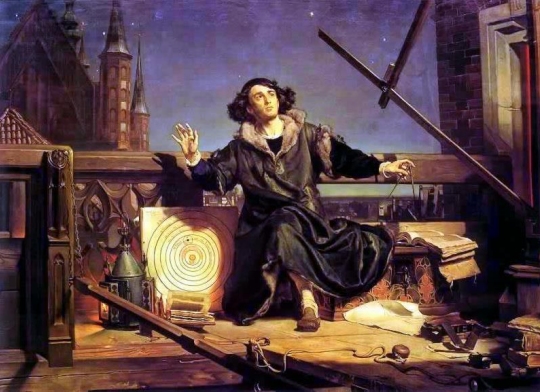
Jan Matejko's painting entitled, "Astronomer Copernicus, or conversation with God."
Jan Matejko’s painting entitled, “Astronomer Copernicus, or conversation with God.”

It is a common statement made in many discussions of how Copernicus revolutionized our understanding of the universe. Goethe’s quote is a typical example:

Of all discoveries and opinions, none may have exerted a greater effect on the human spirit than the doctrine of Copernicus. The world had scarcely become known as round and complete in itself when it was asked to waive the tremendous privilege of being the center of the universe.

If you read one of my previous blog posts you will recognize one myth in that quote. People knew the earth was round long, long before Copernicus. Indeed, by 200 BC or so, the distance around the earth had been measured.

There is, however, another myth in the quote. Do you see it? It is the myth that the ancients put the earth at the center of the universe to indicate how important humanity is and that Copernicus “demoted” the earth and humanity’s importance by taking the earth out of that center. While this myth is commonly taught wherever Copernicus’s revolution is discussed, it is quite false.

Continue reading “Debunking the Myth That Copernicus “Demoted” the Earth”

Debunking the Flat Earth Myth

This painting depicts Christopher Columbus kneeling in front of Queen Isabella.

Since today is Columbus Day, I thought I would discuss a myth commonly associated with the man. I learned it in school, as did many others. It’s the myth that people in Columbus’s day thought the earth was flat. Highlights of American History Before 1850, for example, tells students about a conversation that supposedly took place between Christopher Columbus and Queen Isabella:1

“Your Highness,” said Columbus, “instead of going east across the land to reach India, your traders can sail west across the ocean.” “What? Are you mad?” asked Queen Isabella. “If they sail too far west they will fall off the edge of the earth!”

A more recent book puts it this way:2

Only 500 years ago, sailors aboard the Santa Maria begged Columbus to turn back lest they sail off the Earth’s “edge.”

There is a big problem with such pronouncements: no historical evidence exists to back up the idea that most people (even uneducated people) in Columbus’s day believed the earth was flat. In addition, there is a wealth of evidence that indicates no one took such an idea seriously.

We know, for example, that philosophers understood the spherical shape of the earth long before Christ was born. It was discussed by philosophers like Pythagoras in the fifth century BC3 and became widely accepted when it was championed by Aristotle (384–322 BC). He saw that the stars were different in one part of the world than the other. This indicated to him that the earth must be a sphere.4 The spherical shape of the earth was so widely accepted among philosophers that Eratosthenes (c.276–c.195 BC) used the change in a staff’s shadow resulting from a 500-mile trip to measure the circumference of the earth. He was correct to within less than 2% of today’s accepted value.5

Continue reading “Debunking the Flat Earth Myth”

What Does It Mean To Be Open-Minded?

My new elementary science series has been included in Cathy Duffy's "102 Top Picks for Homeschool Curriculum"
My new elementary science series has been included in Cathy Duffy’s “102 Top Picks for Homeschool Curriculum”
Those who have been homeschooling for many years probably recognize the name Cathy Duffy. For years, her Christian Home Educators’ Curriculum Manual was the main reference homeschooling parents used to choose among their various curriculum options. Over the years, other means by which home educators can get curriculum advice have been developed. Nevertheless, Cathy Duffy continues to be a trusted resource for many homeschooling parents.

Her latest book, 102 Top Picks for Homeschool Curriculum, is a set of reviews of what she considers to be the best curriculum available to home educating parents. I was honored to find out that my new elementary science series has been included in that book. In her review, she writes:

I’m not aware of any other science curriculum similar to this. While it is a Christian curriculum, it avoids the apologetics flavor of some others that spend a lot of energy arguing for creationism and against evolution. Nevertheless, it helps students view science from Christian worldview. The use of hands-on activities to introduce lessons, the multi-age format, and the chronological approach in this series are also features likely to appeal to many families. This seems to me an excellent way to teach science, and an approach that should have exceptional appeal for classical educators.

I truly appreciate Cathy Duffy’s kind words!

Of course, there are many other reviews of my new series, and most of them are very positive (see here, here, here, here, here, and here, for example). There is one negative review as well. In addition, there is one review that is a bit mixed, and it’s the one that caused me to write this post.

Continue reading “What Does It Mean To Be Open-Minded?”

The Bright Morning Star

morningstar

A few days ago, I saw a post on Facebook that was entitled “Full Blown Lucifer Worship At The Catholic Vatican.” It linked to a YouTube video with the same title. The video has more than 110,000 views, so while it is not as popular as a lot of cat videos, it does have at least some level of influence. The problem, of course, is that it is dead wrong. The central piece of evidence it shows for the “full blown devil worship” is a deacon singing the Easter Proclamation during the Easter Vigil in the Roman Rite of Mass. The song, of course, is in Latin, and the video “helpfully” translates the Latin for you. Here is what the video claims the deacon is singing:

Flaming Lucifer finds Mankind,
I say: Oh Lucifer who will never be defeated,
CHRIST IS YOUR SON (!!!!)
who came back from hell,
shed his peaceful light and is alive
and reigns in the world without end.

Now I don’t know Latin, but I figured anything which is sung during the Easter Vigil is probably well known and rather old. So I looked for it, and not surprisingly, I found it on Wikipedia. It is called “The Exsultet,” and Wikipedia helpfully has both the Latin and its English Translation. Here is how Wikipedia translates the same passage:

May this flame be found still burning
by the Morning Star:
the one Morning Star who never sets,
Christ your Son,
who, coming back from death’s domain,
has shed his peaceful light on humanity,
and lives and reigns for ever and ever.

Continue reading “The Bright Morning Star”

For Some Diseases, It Was Vaccination, Not Sanitation

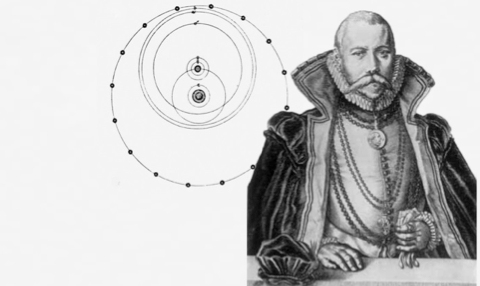
This is the logo of Project Tycho.  It depicts Tycho Brahe with his unique view of the universe. (click for credit)
This is the logo of Project Tycho. It depicts Tycho Brahe with his unique view of the universe.
(click for credit)

Dr. Wilbert van Panhuis and his colleagues have started an exciting initiative called Project TychoTM. In it, they are taking public health data that have been collected over the years and putting them into an easy-to-access digital system that is open to everyone. They describe the goal of their project in this way:

We aim to advance the use of public health data for the improvement of public health. Oftentimes, restricted access to public health data limits opportunities for scientific discovery and technological innovation in disease control programs. A free flow of data and information maximizes opportunities for more efficient and effective public health programs leading to higher impact and better health. Our activities are focused on accelerating the availability and use of public health data…

They named the project after Tycho Brahe, one of the more colorful 16th-century astronomers. Not only did he live an interesting life, he had a very interesting view of the universe. He made an enormous number of astronomical observations that he meticulously documented, and those observations convinced him that the planets must orbit the sun, not the earth. However, he couldn’t give up the idea of the earth being at the center of everything, so he produced what is probably the most interesting view of the universe ever. As shown in the logo above, he put the earth at the center of the universe, and he had the sun and moon orbiting the earth. The rest of the planets were then assumed to orbit the sun, as it moved in its orbit around the earth. While this view of the universe is clearly unworkable, it was incredibly original!

Why would a project involving public health data be named after this colorful character? Because his main contribution to science was the data he collected. While he couldn’t make heads or tails of his data, another astronomer, Johannes Kepler (who was once employed by Brahe) did. Kepler was able to use Brahe’s data to develop three laws of planetary motion that demonstrated all the planets, including the earth, orbit the sun. Sir Isaac Newton was then able to use Kepler’s Laws to develop his Law of Universal Gravitation, which describes how gravity works both here on earth and throughout the universe. Brahe’s data, then, were the foundation of some of the greatest advancements in the field of astronomy in the 16th and 17th centuries.

In Dr. van Panhuis’s view, the data he is collecting could end up being like Brahe’s data. It might be used by other scientists to better understand diseases and how to deal with them as they spread through populations. While I can’t say whether or not that will ever happen, I can say that these data make it easy for me to address a popular myth about vaccination.

Continue reading “For Some Diseases, It Was Vaccination, Not Sanitation”

Will This Bring Back the Moon Dust Argument?

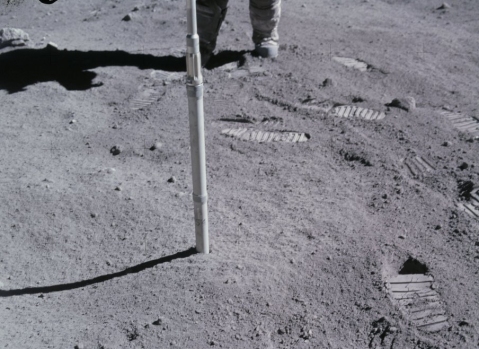
This NASA photo shows the thin layer of dust on the moon.  (public domain image)
This NASA photo shows the thin layer of dust on the moon. (public domain image)

Answers in Genesis keeps a list of creationist arguments that should never be used. It is a good list, and I am glad that Answers in Genesis maintains it. It would be nice if an evolutionary source did the same thing. I don’t know how many times I have to refute nonsense like vestigial tails, lanugo hair, vestigial hair, the vestigial appendix, junk DNA, and all manner of evolutionary arguments that are simply not consistent with the data we currently know.

In any event, the first item on the list of creationist arguments that should never be used is the Moon Dust Argument. In brief, the argument used an estimate of how quickly dust accumulates on the moon to calculate how much dust the astronauts should have found when they landed there. It claims that if the moon were really billions of years old, there should be more than 100 feet of dust on its surface. Astronauts found only a thin layer of dust when they landed, so the moon is not billions of years old.

The problem with that argument rests on the estimate for how quickly dust accumulates on the moon. It was based on how quickly dust accumulates on earth. Obviously, the earth is quite different from the moon, so it’s not clear how good such an estimate is. In addition, other estimates have been made using other methods, and those estimates mostly disagree with one another. Since there seemed to be no good way of estimating how quickly dust accumulates on the moon, responsible creationists stopped using the argument, and that’s how it ended up on the Answers in Genesis list of arguments that should never be used.

Well, some interesting experiments have been done to provide a more direct measurement of dust accumulation on the moon, and the results are surprising, at least to those who are committed to an old earth.

Continue reading “Will This Bring Back the Moon Dust Argument?”

More Consequences of Anti-Vaccination Misinformation

Even though the standard vaccines have been demonstrated to be safe and effective, many people decline to get them for their children, and the results can be serious. (public domain image)

Vaccines are a powerful means by which certain diseases can be prevented. Many scientific studies demonstrate that they are both safe and effective, but unfortunately, there are those who have been convinced by misinformation produced by anti-vaccination groups. As a result, some infectious diseases are beginning to make a comeback in the United States. One of those diseases is measles.

One reason measles is making a comeback in the United States is that there are several other parts of the world where measles has a stronghold. Since world travel is common, it is easy for someone to import the disease back to the U.S. In most cases, this isn’t a problem, because most travelers come into contact with people who have been vaccinated. As a result, the virus has a difficult time spreading, and the traveler is usually the only one who ends up suffering from the infection. Every once in a while, however, a traveler will come into contact with a group that has a very low vaccination rate. When that happens, the disease spreads quickly.

For example, in April of 2013, an unvaccinated person returned home to North Carolina after spending three months in India. Along with souvenirs and stories, the traveler brought home the measles virus. Two other unvaccinated family members got the disease, and in the end, there were 23 confirmed cases of the measles. The vast majority of them (18) were among unvaccinated people. Two of the measles cases were in people of unknown vaccination status, and three were in people who were fully vaccinated.

This, of course, brings up a very important point. When people refuse vaccination, they often think that the only possible consequences will be to them and their family, but that’s just not true. No medicine, including vaccines, is 100% effective. Thus, there will be a small percentage of people who get the vaccine but are not fully protected against the disease. When unvaccinated people provide a breeding and transmission population for the disease, this increases the risk to all people, even those who are vaccinated.

Continue reading “More Consequences of Anti-Vaccination Misinformation”

It’s Interesting, But It’s Probably Not a Footprint

A student sent me the video you see above. In it, a man highlights a South African geological curiosity. He says it is a giant footprint in rock that is somewhere between 200 million and 3 billion years old. He goes on to say that it is so amazing it should be drawing 20 million tourists to South Africa every year, but no one knows about it. He then takes you up a hill to the geological formation, and he shows you what appears to be a huge footprint in a wall of rock. The man points out the features of the “footprint,” and he ends the video with the statement, “There were giants on earth.”

I had the privilege of visiting South Africa in 2004. It is an amazing country, and the people there are simply marvelous. I would strongly recommend it as a vacation destination. However, I wouldn’t put this site on my “top 20” list of things you should see. While it is an interesting geological formation, it is almost certainly not a footprint.

The first problem with the idea that it is a footprint comes from the type of rock in which it is found. The man in the video says that the rock is granite. Now, I am not a geologist, so I can’t be sure that the man is right, but the rock’s appearance is consistent with it being granite. Well, granite is an intrusive, igneous rock.1 What does that mean? An intrusive rock is one that is formed underground. An igneous rock is one that is formed from molten rock, such as magma. So if this rock is granite, there is no way it could harbor a footprint. The only time a foot could have sunk into it was when its temperature was several hundred degrees, and it was below the surface of the earth!

Continue reading “It’s Interesting, But It’s Probably Not a Footprint”